

Ceiling Fan Installation in Kiawah Island, SC

Ceiling Fans That Should Feel Calm, Quiet, and Well Placed
In a Kiawah Island home, a ceiling fan should not feel like the loudest feature in the room. It should support comfort quietly, move air evenly, and fit the space without disrupting the home’s design. The right fan can make a bedroom feel more restful, a screened porch more pleasant, or a sitting area more comfortable during humid coastal weather.
This type of installation requires more than selecting a fixture that looks attractive. The fan needs to match the room’s scale, ceiling height, exposure level, control preference, and how the space is used. When those details are handled well, the finished fan feels like part of the home instead of a later addition.
Kiawah Island Homes Deserve a More Refined Installation Plan
Many Kiawah Island properties are designed with quiet views, natural light, outdoor living, and carefully finished interiors in mind. A fan that is too large, too low, too noisy, or visually heavy can change the feel of the room in the wrong way.
Before installation, the room should be evaluated as a whole. The ceiling structure, furniture placement, airflow direction, blade clearance, finish, and control method all matter. A thoughtful plan helps the fan improve comfort without distracting from the space.

Fan Installations That Fit Coastal Living
Screened Porches
A screened porch can feel more comfortable with a fan that is selected for humidity, exposure, and the room’s relaxed outdoor setting.
Primary Bedrooms
A bedroom fan should operate quietly, look balanced, and provide gentle airflow without making the room feel drafty.
Sitting Rooms
Reading rooms, lounges, and quiet gathering spaces may need subtle air movement that does not overpower the room.
Upper-Level Spaces
Rooms closer to the roofline may collect heat and benefit from a fan that is sized and mounted with care.
Coastal Exposure Changes the Fan Selection
A fan used near open-air spaces has different requirements from one installed in a fully interior room. Salt air, humidity, and changing weather conditions can affect finishes, hardware, and long-term performance. Even a covered or screened area may need a fan rated for damp conditions.
Choosing the correct fan rating helps protect the installation. It also reduces the chance of premature wear, noise, or fixture problems caused by using an indoor-only product in the wrong location.
Planning a fan for a screened porch or coastal bedroom?
When a Ceiling Fan Upgrade Is Worth Planning
1
The Room Feels Still During Humid Weather
A fan can add gentle movement to a space that feels heavy or uncomfortable during warmer months.
2
The Existing Fan Distracts From the Room
Noise, wobbling, outdated finishes, or poor sizing can make an older fan feel out of place.
3
The Porch Needs More Usable Comfort
A screened or covered outdoor area may feel more inviting when air movement is steady and quiet.
4
The Controls Feel Inconvenient
A fan that is difficult to operate can make an otherwise comfortable room feel less finished.
The Hidden Support Matters as Much as the Fan Style
A ceiling fan creates movement every time it runs. That means the mounting box, support hardware, wiring, and control setup need to be appropriate for fan use. A beautiful fan will not feel high quality if it wobbles, hums, or responds poorly to the controls.
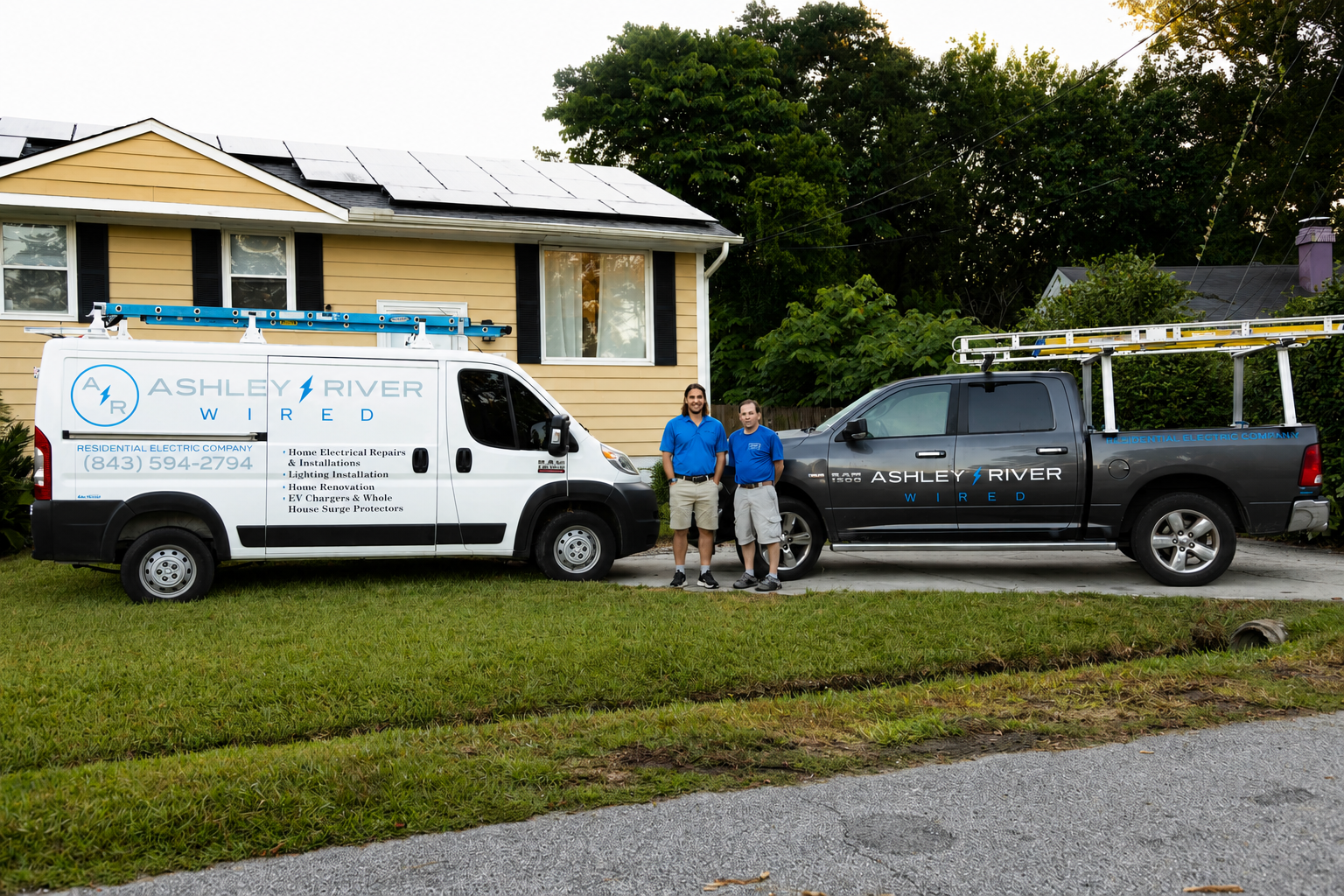
Ashley River Wired reviews the installation point before the fan is installed. This helps confirm whether the ceiling can support the fixture, whether the wiring matches the desired control setup, and whether the fan will sit at a safe and comfortable height.
In a well-designed home, comfort features should be easy to use without drawing attention. A ceiling fan should not require confusing switches, awkward pull chains, or controls that feel disconnected from the room.
Depending on the space, a wall control, remote, or separate fan-and-light setup may make the most sense. Planning this early helps the fan feel polished after installation, especially in guest rooms, porches, and shared living areas.
Controls Should Stay Simple and Discreet
A Fan That Belongs in the Space
The best ceiling fan installation is the one that feels natural after the work is complete. It should be secure, quiet, properly scaled, and suited to the coastal setting. It should improve comfort without competing with the room’s finishes, views, or layout.
For Kiawah Island homeowners, this balance matters. The fan should support the way the home is enjoyed while maintaining the refined feel of the property.
Ready to Install a Ceiling Fan in Kiawah Island?
If a bedroom, porch, sitting area, or upper-level room needs better airflow, Ashley River Wired can help plan a ceiling fan installation that fits the home.
Frequently Asked Questions
What type of fan works best for a screened porch?
A screened porch usually needs a fan rated for damp conditions because humidity and coastal air can still affect the fixture. More exposed areas may require a wet-rated fan.
How do I keep a ceiling fan from looking too bulky?
Fan size, blade span, finish, mounting height, and room scale all matter. A properly selected fan should feel balanced with the ceiling and furniture layout.
Can a ceiling fan be quiet enough for a bedroom?
Yes. Choosing the right fan and installing it with proper support can help reduce noise, wobbling, and unwanted vibration.
Should the control setup be planned before installation?
Yes. Wall controls, remotes, and separate fan/light control options can affect how convenient the fan feels every day.